Showing posts with label Infertility. Show all posts

Thursday, 13 November 2014

Intrauterine Insemination (IUI) / Artificial Insemination


IUI (Intrauterine insemination) is also known as artificial insemination. It’s a procedure to assist humans to get pregnant. As mentioned in our previous post, a woman’s reproductive system consists of ovaries, fallopian tube, uterus, endometrium, cervix and vagina. IUI is performed in woman’s who has difficulty in getting pregnant. Sperm that have been washed and concentrated are placed directly in your uterus during time of ovulation. The expected outcome of this treatment is for the sperm to swim into the fallopian tube and fertilize the waiting egg, consequently leading to normal pregnancy.

So who requires IUI treatment?


  • Ovulation Problem
  • Endometriosis
  • Cervical factor infertility (cervical mucus that inactivates sperm motility)
  • Unknown infertility cause
  • Low sperm count
  • Low sperm motility
  • Sexual dysfunction

Prerequisite of IUI
1. Able to ovulate
2. Minimum sperm count of 10 - 20 million
3. At least a single tube is patent

Risks of IUI
Infections: Studies indicated that less than 1% of women experiences infection of the procedure, whereas 99% of them don’t.
Spotting (very light bleeding): Sometimes process of placing the catheter in uterus can cause small amount of vaginal bleeding. This does not usually have an effect on the chances of pregnancy.
Multiple pregnancies: IUI itself does not associate with the increased risk of multiple pregnancies (twins/triplets/etc.). However, when coordinated with ovulation inducing medication, risk of multiple pregnancy increases significantly

Preparations
Preparing the semen sample: Your partner provides a semen sample at your doctor’s clinic/ home collection ( if house is nearby in which the specimen can be delivered within one hour). The purpose of this sperm washing is to ensure the concentration of the sperm is higher than the seminal fluid.
Monitoring your ovulation: 


Your Doctor will be giving you a planner that indicates what you will be exposed to from Day 1 to Day 28 throughout this IUI treatment.

On the day of IUI, the male partner have to produce the semen to be processed. Here are the things one should follow to ensure a accurate results:

  1. Abstain from sexual intercourse/ejaculation for minimum 3 days - 7 days prior to test.
  2. Sample must be collected in a sterile container (provided by the clinic only). Please ensure that the container used is labelled with your details.
  3. First wash your hands and your genital part with soap and water and ensure complete removal of all soaps residues and dry thoroughly.
  4. Sample is obtained through masturbation into the sterile container provided.
  5. Do not use any forms of lubricants or a condom during masturbation, as they may contain harmful chemicals which can affect the test result.
  6. Collect the sample ejaculate ( if the sample is incomplete/spilled, please make sure to update it to the lab technician
  7. Fill in all the information in the request form and hand it over together with the specimen
  8. If specimens are collected from home, deliver the specimen to the laboratory within ONE hour of the collection. Specimen should not be exposed to extreme temperatures, therefore, when delivering the specimen, keep the container at body temperature, for example place it inside your jacket/shirt pocket. DO NOT refrigerate the specimen
You will be wondering just how the procedure will be like, pictograms below will explain all of your questions :)
Source:google image
Steps :
       1. As I mentioned earlier, sperms are washed in a
 way that separates the high quality 
sperms from poor ones and other residuals
2. Washed sperm will be injected into uterus


This diagram illustrates the movement of the washed sperm

Source:google image


As you can see the washed sperm will travel to
the location of the waiting egg to fertilize it.
Source: google image

What happens after the procedure?
After the insemination, you will be asked to lie on your back for at least 15 minutes. Once the procedure is over, you can get dressed and continue your normal daily activities.

Wait for TWO weeks before taking at-home pregnancy test. Testing too soon could produce a result that is :
  • False-NegativeIf your hormone levels are not yet at a measurable level, the test may give negative results when, in fact, you really are pregnant.
  • False-Positive: If you are using ovulation inducing medications such as HCG, the medication that's still circulating in your body may indicate a pregnancy when you really aren't pregnant.
Your Doctor may instruct you to return to the clinic about two - three weeks after your home pregnancy kit results for a blood test, which is more sensitive in detecting the pregnancy hormone after fertilization.

p/s: If you don't become pregnant, you might try IUI again before moving onto other fertility treatment.

What are the side effects after IUI?

  • Lower abdominal cramp (expected to have)
  • Vaginal spottings
  • Bloated sensation
The Do's and Don't after IUI

  1. It is encouraged to continue lying down for 15-20 minutes post the IUI procedure. Feel free to get up and move about after that as the cervix will close after IUI and also the sperms will be where it should be.
  2. There is no restriction in activity. There is no need for bed rest, diet and travel restrictions.
  3. The couple may continue to have sex if they desire after the insemination procedure is over. In fact, it may aid conception. 
  4. Pain killer like buscopan can be taken, which the doctor will prescribe in case any pain or cramps are experienced after the procedure. NSAIDs like ibuprofen should be avoided.
  5. After IUI, the woman will be asked to take some medications which help provide hormonal support and implantation of the embryo. These can be in the form of oral medications or suppositories. These should be taken as advised
What are the success rate of IUI?
The success rate depends on the cause and severity of the infertility and your age. Over 50 %  of women aged under 40 conceives within six cycles, and trying for further six cycles works for another 25% of women 

For a better understanding on IUI procedure, check this video out..


-Admin K


Friday, 22 August 2014

Jaya Balan's Women's Health & Fertility Clinic offers our thoughts and prayers to the affected family of MH17. How do we say goodbye when we've never said hello? This one minute of silence to honour lives, loves and dreams cut short by madmen and madness is our way of saying we may not have known you, but we will never forget you. Rest In Peace.

_______________________________________________________________________________

LAPAROSCOPIC SURGERY

What is laparoscopic surgery??

Laparoscopic surgery, also recognized as minimally invasive surgery is a modern surgical technique in which operations are executed through small incisions in the abdomen. The surgeon inserts a tiny telescope also known as laparoscope through the small incision at the umbilicus (belly-button). The laparoscope is an instrument rather like a miniature telescope with a fiber optic system which brings light into the abdomen. It is approximately as big as a fountain pen and twice as long. The laparoscope allows the surgeon to see the pelvic organs on a video monitor. Some additional smaller incisions are made in the abdomen to place specially designed surgical instruments that aids the surgeon to execute the same procedure as in open abdominal surgery. An instrument to move the uterus during surgery will be placed in the vagina and carbon dioxide gas is placed into the abdomen via a special needle which is inserted just below the navel. This gas will help to separate the organs inside the abdominal cavity making it easier for the surgeon to see the reproductive organs during laparoscopy. Not to worry, as the gas will be removed at the end of the procedure. Laparoscopic surgery is implemented for a range of operations including endometriosis and ovarian cysts.

  
The surgeon inserts  laparoscope through the small incision at the umbilicus (belly-button)

 
Carbon dioxide gas is placed into the abdomen via a special needle which is inserted just below the navel. 
 
The laparoscope allows the surgeon to see the pelvic organs on a video monitor.The carbon dioxide gas will help to separate the organs inside the abdominal cavity making it easier for the surgeon to see the reproductive organs during laparoscopy

 
After the surgery, there will be ONLY THREE small incisions.

What is a diagnostic laparoscopy?
A diagnostic laparoscopy is a procedure in which the surgeon uses a laparoscope to look at the organs and tissues inside the abdominal cavity.

Can endometriosis be treated laparoscopically?
YES. A laparoscopic biopsy is required to diagnose endometriosis. Endometriotic implants are ideally treated laparoscopically with excision. This treatment usually produces more immediate results in terms of pain relief and improves fertility compared with medical therapy.

What procedure can be done by laparoscopic surgery??
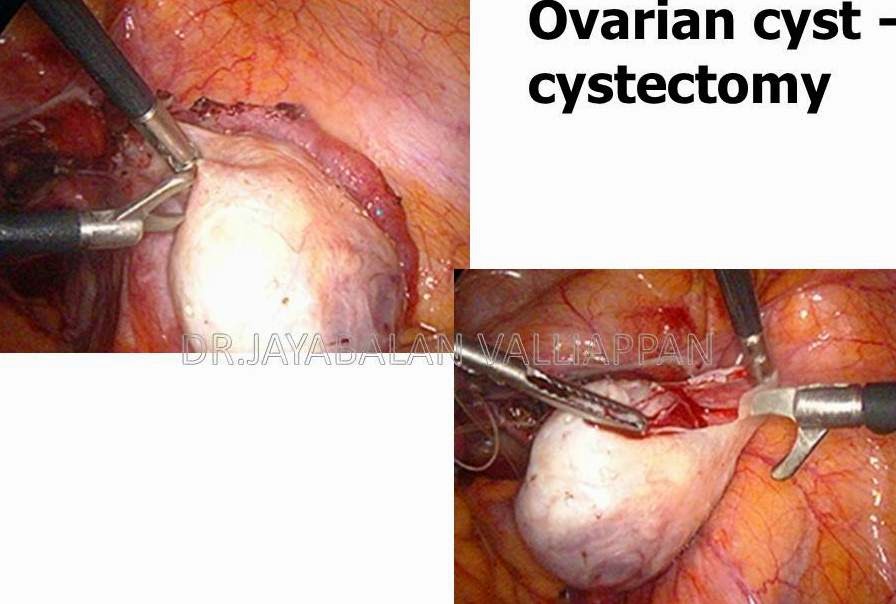
Almost all surgeries being done in open surgery are nowadays being performed using this method. The most common however are cholecystectomy (removal of the gall bladder), appendectomy (removal of the appendix), tubal ligation (sterilization), diagnostic laparoscopy, hernia repair. Below shows some pictograms of procedures done via laparoscopically:


What are the advantages/benefits of this method?
In conventional surgery, operations are carried out by making a long incision to gain entry into the abdominal cavity. Eventually this act, results in greater post-operative pain, extended stay in hospital, delayed recovery, long and ugly scars, respiratory problems, greater chances of wound infections, higher chance of incisional hernia, delayed feeding after surgery and etc. The prevalence of all of these is dramatically reduced by performing laparoscopic surgery.

ADVANTAGES to the patients with LAPAROSCOPIC SURGERY Vs. OPEN ABDOMINAL SURGERY are as follow:
-Reduced bleeding  -> (Reduces the chance of needing blood transfusion)
-Smaller incision     -> (Reduces pain and shortens the recovery time)
-Less pain              -> (Less pain medication required)
-Reduced exposure of internal organs to possible external contaminants  -> (Reduced risk of acquiring infection)
-Although procedure time consumptions are slightly longer  -> (Hospital stay is less, and often discharge on the same day).


What are the risks of laparoscopic surgery?
The risk factors are almost similar for both laparoscopic and open surgery. However, there is a small chance – 1:1000 that the surgeon may not be able to complete the procedures laparoscopically. This may be secondary to unexpected complication or could be because the surgery cannot be safely performed with a laparoscopic approach.

General risk factors:
-May have risk when given general anesthesia
- Chances of infection or bleeding
-Abdominal organs, glands, intestines, or blood vessels may be damaged if surgeon is not experienced
-Lining of abdominal wall may be inflamed knows an peritonitis
-Blood clot may enter the bloodstream and clogs the artery in the lung, pelvis or legs. The clot may break off and clogs an artery in the heart or brain causing heart attack/stroke. HOWEVER, THESE RISKS ARE VERY RARE.

Where can I get it done?
Laparoscopic surgery has become very common and is being done in almost every reputed hospital with minimal complication rates.

Is it more expensive than open abdominal surgery?
The equipment utilized, maintenance and procedure are more expensive but as the hospital stay and the intake of drug is reduced which makes the cost the same if not less than open surgery.

Will I need anesthesia?
Diagnostic laparoscopy and hernia repairs can be done under local anesthesia but the other procedures will require general anesthesia.

How do I prepare myself for laparoscopy surgery? 
-The day before – eat light and healthy food and drink lots of fluids.
- Do not eat or drink anything after 12.00 midnight (the night before the surgery).
-It is advised to have some supper around 11.00 pm so that you are not totally in starvation mode throughout the next day.
-Do not smoke after 12.00 midnight.
-Your Doctor will probably ask you to do enema to clean your bowel. This will be done during the surgery day.
-Pack a hospital bag including: warm, loose clothing to wear after the operation, clean socks to keep your feet warm after surgery. Leave your valuables at home.
-Remove nail polish, remover jewelry and contact lenses.
-Take a warm bath the night before and get a good night sleep.

What can I expect immediately following laparoscopy surgery?
Generally, you will experience any of the following symptoms within the first 24 to 48 hours:
-Nausea and lightheadedness
-Scratchy throat if a breathing tube was used during general anesthesia
-Pain around the incision
-Abdominal pain or uterine cramping
-Shoulder tip pain-secondary to the carbon dioxide gas
-Tender umbilicus (belly-button)
-Gassy or bloated feeling
-Vaginal bleeding or discharge (like a menstrual flow)

What is the normal recovery time following laparoscopic surgery?
Recovery time usually depends on the type of procedure performed. Most of the patients will feel well within days of surgery. Nevertheless, if major surgery has been executed, rest is still required. Most of the patients will require some form of pain medicine in the immediate postoperative period. Your doctor will discuss this with you after surgery and assist you to make an informed choice.

How long will it take for full recovery?
The following is a normal timetable for recovery of minimally invasive surgery on the abdomen:
-Groggy feeling from the anesthetic disappears the day after surgery and the individual is fully alert once again.
-Any pain in the shoulders or neck area usually goes away after a few days.
-Soreness in the incisions disappears within a few days and the incisions heal after about five days.
-The bloated feeling after abdominal or pelvic laparoscopy goes away within a few days. 

How long do I have to stay in hospital?
Healthy person without any other medical complications can be investigated on an out-patient basis. They can come in on the day of the surgery or the previous day. Following laparoscopic procedure for the gall bladder or appendix, patients can be discharged on the next day. However, for more advanced procedures three to four days in hospital would be normal.

Do I have to take absolute bed rest?
NO. The advantage of this laparoscopic procedure as it has been previously mentioned is that the incisions are very small thereby reducing pain and danger of hernia. Patients will be able to walk as soon as pain and anesthetic factors allows them do so.

When can I get back to work?
Generally, a week of rest from the day of the surgery should suffice. Still, it would be advisable for you to discuss with the surgeon based on your progress.

How soon can I start eating after surgery?
If the surgery runs smoothly without any other complications, feeding can be started on the same day once the patient has recovered completely from the effects of anesthesia, provided no procedure has been performed on the bowel.

I’m going to have a gynecological laparoscopy and dye test. What does this involve?

Answer
If you're having investigations for infertility, your doctor may ask you to have a gynecological laparoscopy and dye test. The dye test is used to check whether your fallopian tubes are blocked or not.

Explanation
Generally, an egg travels down to the fallopian tubes from your ovaries, to your womb. If you have unprotected sex, sperms will swim up to the fallopian tube and fertilize the egg, which results in pregnancy. However, if your fallopian tubes are blocked, the egg and sperm will not be able to meet. If you are having problems in getting pregnant, your doctor may suggest you to have a laparoscopy and dye procedure. During this procedure, your surgeon will be able to visualize whether there are any obvious reasons on why you were not able to get pregnant. At the same time, the doctor may also do a hysteroscopy. This is a procedure in which, it allows the surgeon to look inside your womb using a narrow tube-like telescopic camera called a hysteroscope. During laparoscopy, a harmless blue dye is injected through your cervix and into your womb and fallopian tube. The dye will run through your womb and fallopian tubes and will come out of the end of the tubes if they are normal. After the procedure, you may have a dark vaginal discharge for a day or two. Your surgeon will explain what to expect and how to look after yourself following the procedure.
Is laparoscopy useful in children?
Several procedures can be done by laparoscopy in children. Laparoscopy is most commonly done to find and treat the cause of abdominal pain in children when other investigations have not been helpful.  Appendicitis can be diagnosed and appendectomy can be done laparoscopically.  It may be equally easy and safe to do an open appendectomy. Other common indications are for treatments of benign ovarian cysts and when lower intestinal bleeding is suspected to be from a Meckel's diverticulum.
Is some operation like hydrocele, fistula and etc. is possible?
There is a common confusion about the procedures possible through laparoscopic method. We are getting letters from many patients asking about laparoscopic procedure for hydrocele, Fistula ano, abscesses, and even for procedure like circumcision, mastectomy, cysts and abortion. It should be understand clearly that minimal access surgery is possible inside hollow closed cavities of the body, like abdomen and chest. Most of the procedure of the diseased organ inside the chest and abdomen can be performed by minimally invasive techniques but operations on solid organ outside the abdomen and chest does not require and also not possible through this technique.


-If you have a dream, don’t just sit there. Gather courage to believe that you can succeed and leave no stone unturned to make it a reality,:Roopleen-
-Admin K


Tuesday, 5 August 2014

Infertility

(source: Google image)

What is infertility?
About one in every seven married couples experiences difficulty in having children. Sub-fertility affects both men and women equally and therefore the problem should be regarded as a shared one.

When to consult the Doctor??
It is wise to seek advice from a fertility specialist if you do not become pregnant after trying to conceive for about six months to one year (depends on female partner's age)


(source: Google image)
The above protocol is applicable for women with no pelvic pathology such as fibroids, endometriosis and ovarian cysts 

We can categories Infertility problems as following:
i) Primary Infertility – where someone who has never conceived a child in the past and is facing difficulties to conceive
ii) Secondary Infertility – where a person has had one or more pregnancies, including miscarriages in the past, but is having difficulties to conceive again.

Infertility doesn't mean you can never have a child.
It just means you or your partner or the both of you need some “fine tuning” or some form of fertility treatment to help you to conceive.

What causes infertility?
Fertility problems in Women
a)    Ovulation Problems - Inability to produce mature eggs or inadequate number of eggs due to pre-mature menopause  and aging problem
b)    Blocked tubes - prevent sperms from reaching the eggs
c)    Endometriosis
d)    Polycystic ovaries
e)    Smoking
f)     Age, (>35 years fertility problems; after 45 years pregnant is rare)
Fertility problems in Men
a) Poor semen quality
  * Low sperm count
  * Low sperm motility
  *Abnormally formed sperm
  *Blocked sperm ducts
b) Alcohol consumption and smoking lowers sperm count
c) Drugs - affects sperm production
d) Exposure to radiation
e) Varicocele

Whom to test and when to test??
   i) Women who is >35 years old and have been trying to conceive for 6 months plus
  ii) Women who is < 35 years old and have been trying to conceive for one year
            
What kind of tests will be conducted??
a) For Men
   -SFA (Seminal Fluid Analysis) (refer to note 1 & 2)
b) For Women
     Ovulation tests
 1. Transvaginal Scan (TVS)
 2. Hormone tests
     Tubal patency
      1. HSG (Hysterosalphingogram)
      2. Laparoscopy

Seminal Fluid Analysis
Instructions before proceeding to seminal fluid analysis
(Note 1 & 2 respectively)
Image illustrates alive and dead sperms.

Trans vaginal Scan (TVS)

Picture 1: Scanning room

(source: Google image)
Picture 2: Intra-transvaginal ultrasound probe
(source: Google image)
Picture 3
(source: Google image)
Picture 4: Scan image shows development of follicles 
(source: Google image)


What is HSG??
HSG is carried out in women who are <35 years old and in women with no gross pelvic pathology noted on ultrasound . 

HSG is an office procedure which takes no longer than a half an hour. It is done in radiology department and carried out by placing an iodine-based dye through the cervix and taking x-rays to help to determine the shape of the uterus and to check whether the fallopian tubes are blocked or open.The pain is bearable and there is no need for anesthesia.  Occasionally the dye used during a hysterosalpingogram will push through and clears the blocked tube. This test also helps to discover problems in uterus, such as an injury, polyps and fibroid's. 

Fasting before procedure is not required. This test is usually carried out after your period that is from Day 6 to Day 10. We don’t do the procedure during the Day 10 to Day 14 as it will be your ovulating period, which we don’t want to interfere with the possible pregnancy.

Picture 5: HSG procedure room
(source: Google image)

Picture 6 :  The injected dye shows the blockage at the both side of fallopian tube (arrow)

(source: Google image)
Picture 7: Injected dye illustrates the patent fallopian tubes
(source: Google image)
Picture 8: Brief explanation of HSG procedure


Pre-pregnancy Counseling
 It is vital to go for a consultation before you plan to get pregnant especially if either or both partners have medical related issues. During consultation with the doctor, they can investigate whether there are any problems that could affect their pregnancy and other problems that should be treated to improve fertility and increase the chances of getting pregnant and having a healthy baby.

Contact us for further information regarding your fertility issues;
Contact Number:
Hospital D/L   : 05 - 540 5555 EXT. 5665/5666
Tel / Fax        : 05 - 540 5665
Email             : drvjbalan@gmail.com


p/s:  Stay tune for our next topic " Laparoscopy"!!! 


It's hard to wait around for something you know might never happen; but it's even harder to give up when you know it's everything you want. Don't give up. Seek help!
-Admin K

Thursday, 24 July 2014

Introduction

Jaya Balan Women's Health & Fertility Clinic

OUR SERVICES:

1. Fertility Screening & Counseling
2. Laparoscopic Surgery : -eg.
    * Cystectomy

    * Hysterectomy
    * Fertility Enhancing Surgeries
3. Intrauterine Insemination (IUI)
4. Test tube baby or In-Vitro Fertilisation (IVF) [ Shared Care]
5. Intracytoplasmic Sperm Injection (ICSI) [Shared Care]
6. Post IVF Care
7. Other Gynaecological Surgeries:
    * Myomectomy
    * Ovarian Cyst Removal
    * Menopause & Adolescent Gynaecology
    * Hysterectomy
    * Prolapse Surgeries or Urogynaecological Surgeries
    * Vaginal Hysterectomy
8. Obstetric Services:
    * Antenatal Care & Delivery ( Normal & Caesarian)
    * Post Partum Care

Operating Time:
Monday - Tuesday                      09:00 - 17:00
Wednesday                                 09:00 - 13:00 & 18:30 - 21:30
Thursday - Friday                       09:00 - 17:00
Saturday                                     08:00 - 13:00

Contact Number:
Hospital D/L : 05 - 540 5555 EXT. 5665/5666
Tel / Fax        : 05 - 540 5665
Email             :drvjbalan@gmail.com


Location:

(source: google)

Pantai Hospital Ipoh,
Suite 302 & 303, 3rd Floor,
126, Jalan Tambun, Ipoh, 
Perak Darul Ridzuan.

Map:
(source: google)

Snapshots of Our Clinic

Front view of Clinic

Side view of Clinic

Registration Counter